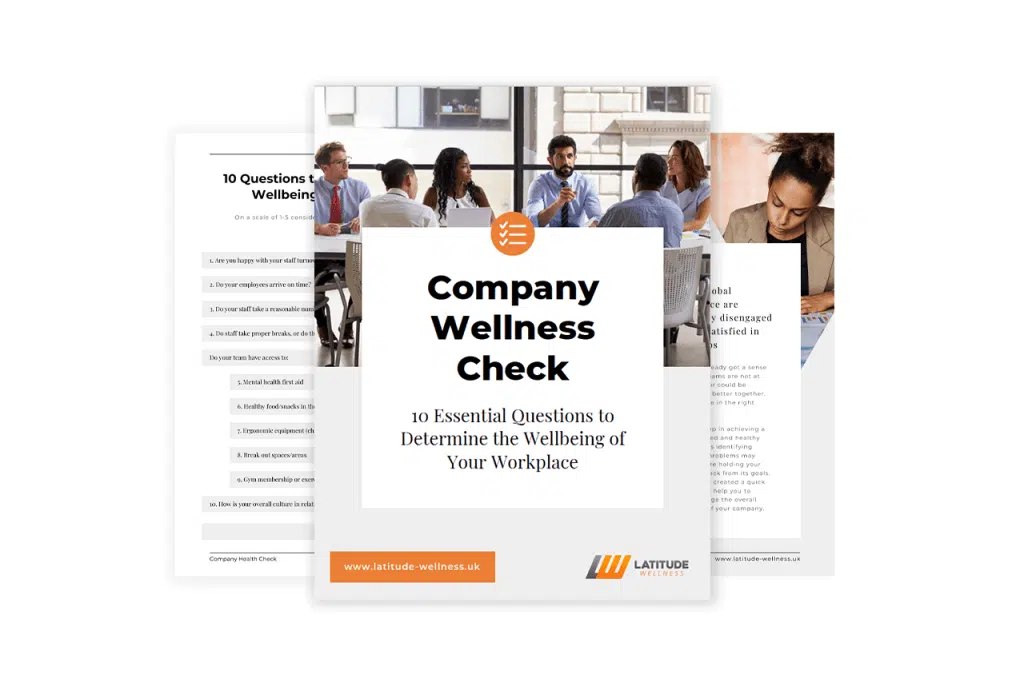
Why employee wellbeing starts with you:
As employee engagement and wellness hustle towards the centre stage of the corporate world, we explore why it’s vital to see them as an integral part of your organisation’s business strategy.
Unhealthy and unengaged employees are a drag on productivity, innovation, and the bottom line…taking a lead on wellness, leads directly to healthier profits. Read on to learn how.
Happiness at Havard
One of the most popular courses at Harvard Business School this academic year may well surprise you: the 180 spots in Arthur Brooks’s “Leadership and Happiness” fill up quickly.
As business schools train the bulls and wolves of tomorrow, skills like deal-making and financial modelling are facing competition from courses on happiness, relationships and balance at top M.B.A. programs.
The Harvard course’s objective? To teach the business leaders of tomorrow how to ‘manage happiness’: in themselves, and in their employees.
The seven-week course was first offered in the spring semester of 2020, intersecting with the arrival of Covid-19. Happiness at work has since taken on new urgency for employees and managers as workers are resigning at record rates and rethinking their goals. In the first 10 months of 2021, America’s workers handed in nearly 39 million resignations, the highest since tracking began in 2000 leaving companies scrambling to reduce presenteeism and turnover – and looking for new ways to make workers stay. (Wall Street Journal)
(See our previous blog for more on this).
The Harvard course’s popularity reflects then both the demand for soft skills and the desire for more-balanced lives.
There’s also the acknowledgement amongst schools that teams model the boss’ behaviour: if the head honcho is happy, perhaps the hive will be too.
Happiness: A Business Strategy
Engaged employees produce better business outcomes than other employees do – across industries, company sizes and nationalities, and in good economic times and bad. (Gallup)
More present and productive, engaged employees are also more attuned to the needs of customers; and they are more observant of processes, standards and systems. When taken together, the behaviours of highly engaged business units result in 21% greater profitability. (Gallup)
Approaching engagement as a business strategy yields clear results: but where to begin?
Leading them Happy
Almost 17% of US gyms and fitness clubs were permanently closed because of the pandemic. (IHRSA)
Employers are in the unique position of being able to step into this gap, offering in-house access to fitness, nutrition and health…to be enjoyed both at work and at home – whenever the user feels it’s most convenient. As lockdown gym closures caused an increase of 130% in sales of fitness equipment, employees are primed to work-out and home and a comprehensive wellness program can motivate them to do so. (NPD)
Not only do employee wellness programs directly benefit the health of the workforce, they can develop team loyalty and cultivate a sense of being valued amongst co-workers – leading to increased engagement and productivity.
While more than 85% of large employers offer a wellness program, Gallup research shows that only 60% of U.S. employees are aware their company offers a wellness program — and only 40% of those who are aware of the program say they actually participate in it. (Gallup)
Wellness programs work best, as Harvard knows, when the boss gets involved, champions and amplifies the program. Studies have shown that wellness programs with strong leadership support produce positive wellness outcomes and faster ROI. (The Institute for Health and Productivity Studies).
If you want to see a more rapid return on investment – in engagement and therefore profit – managers need to model involvement in wellness.
Work on employee wellness from the top down by:
- Encouraging participation from all sections of the business: offer incentives, inter and intra department / site competition, setting company goals
- Recognise and reward high participation in managers, employees and departments or sites
- Participate to show a flat hierarchy when it comes to wellness
- Create a policy to allow space in the working day for employees to engage in components of the program
- Influence through creating connections within and communicating enthusiasm for the program
Whether it’s providing space in the working day to access wellness resources – be it mediation, fitness classes or mental health podcasts such as we offer at Latitude – or managers’ visible enthusiasm and utilisation of the program, the bottom line is that your company’s profit margin is linked to leaders’ participation.
Learn more about how Latitude can help you take a lead on wellness in your business and see it pay dividends in engagement and profit. Contact one of our friendly team today to discuss your goals and our service.