Staying perky: which employee perks will pack a punch in the workplace post-pandemic…
The legendary Californian office spaces of tech firms like Google used to lead the pack when it came to enticing talent to their ranks with quirky perks.
Nap pods at Google HQ, three meals a day at Facebook, lunchtime jam sessions at Spotify, or relaxation lounges at Zynga appear to humanise workers, bringing fun into the workspace and playing to their needs as a person, not just their role in the organisation.
…and this seemed a world away from the reality of most people’s experience of work in the UK – especially back in the early 2000s.
Benefits, if you received any, would probably have been fairly run of the mill and small scale in comparison: free coffee, free parking.
But, as we explored in our last blog, the Great Resignation of 2021 – and employers’ responses during the height of the pandemic in 2020 – have shifted thinking.
Perks are no longer confined to the tech sector, nor the US…and as more workplaces wake up to the ways that can attract and retain staff, are you ready to produce equal perks to keep your people positive and productive?
And what do workers really look for in a rewards package?
Read on for our run down of the most memorable – but also the most meaningful – ways you can reward your team.
Pick of the Workplace Perks
The pandemic shifted work to the home and many employers, used to the visual check-in of their workforce in a centralised hub, felt the pressure to ensure the team did not become fragmented or anxious as a result of the new working practice.
Inventive – and often expensive – methods were employed to keep teams engaged, actively improve their well-being and sustain their productivity.
Our pick of the top five pandemic inspired perks:
- A loan firm in Washington DC gave out $250 grocery gift cards at the beginning of the pandemic to its operations staff. Then, for seven months, offered some employees the choice of paid weekly house cleaning or meal delivery of up to $135 a week. (Apex Home Loans)
- Increased paid time off, first by giving every other Friday off, then by switching to unlimited vacation. (Silverback Strategies, a 65-person digital-performance marketing agency)
- Rolled out Ginger, a 24-7 emotional-support app that allows employees to text a behavioral-health coach and schedule a virtual counseling session. (DC’s Vox Media, which has more than 1,200 employees)
- Reimburses staffers for one weekly coffee-shop purchase, both to ‘perk’ them up and to support those small businesses. (Avalon Consulting Group, a 60-person marketing firm in DC)
- A monthly $300 “Covid-assistance bonus” that employees can use however they like. The money has come from funds that have gone unspent because the team was not in the office drinking coffee, eating free lunches, or throwing office happy hours. (Improbable, a 47-person tech firm in Arlington)
These perks are certainly generous, but are they sustainable? Reacting to the shock of the pandemic with such generosity is certainly commendable, but arguably must sit alongside not and not replace a cohesive HR strategy.
Pointless employee perks?
Joe Wiggins, a career trends analyst at employee review site Glassdoor, says that as most businesses are rethinking how their offices are going to operate in future, they are having to revamp their employee perks policies too.
“Free food and fun break-out spaces are cool, but they’re not going to keep people in a job if the fundamentals aren’t there,” he says. “Contributions towards home offices, mobile phones or broadband…was the initial response, but as everyone dug in for the long haul we’ve seen more companies introducing mental and physical well-being perks.”
The tussle over a shrinking talent pool is intensifying and businesses are experimenting with all kinds of well-being measures to entice new staff.
Top priorities for enhancing benefits include: wellbeing programmes (60%); mental health and stress management services (58%); annual leave policies (26%); and voluntary benefits (23%).
And word is spreading fast as employees swap notes on company policies under hashtags like #ShowUsYourLeave on LinkedIn and Twitter.
Neither perks nor work happens in silos and workers talk openly about their workplaces. With two-in-five employers making, or planning, benefit changes and a third of companies looking at their healthcare strategies for next year as well, is your benefits programme fit for purpose after the pandemic?
Latitude’s wellness hub may well be the meaningful reward you’re looking for for your team: our resources cover areas like fitness, nutrition and mental wellbeing, and through a powerful mix of multimedia resources our coaches instil a greater sense of purpose within your organisation.
We want to energise workers and promote positive mindsets because we truly believe that wellness should not be a perk, but the purpose of a workplace rewards package.
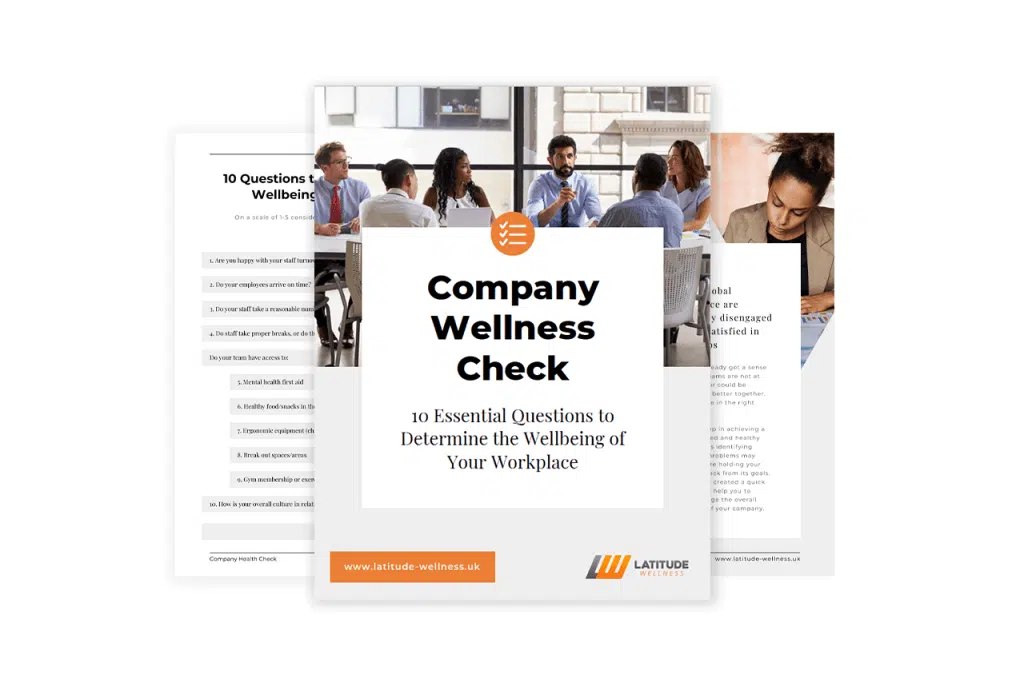
Download our workplace wellness assessment: