
Wellness and wellbeing are terms that are often used interchangeably but appreciating the difference can switch up your approach to your employees’ health – and hugely impact workplace engagement and productivity.
The bottom line is that wellness is an important element of overall wellbeing, but is not the only aspect of ‘being well’.
This week’s blog wrangles with both words and their mutual importance to positive, healthy and productive outcomes in the workplace and beyond.
Welcome Change
Wellness looks like physical health: largely tied to healthy lifestyle habits around eating, physical activity and sleep. If your aspiration as an organisation is to inspire and promote employee wellness, you’re on the right track – but you need to aim higher.
Wellbeing is a broader, more encompassing, concept. The OED defines wellbeing as “the state of being comfortable, healthy, or happy.” Whilst this state certainly includes physical wellness, other aspects are clearly factors in contributing to a thriving life. In this respect, the description of wellbeing from the New Economics Foundation is useful:
Wellbeing can be understood as how people feel and how they function, both on a personal and a social level, and how they evaluate their lives as a whole.
So what adds up to this more holistic view of being well? We think the following are core components of wellbeing…
- Physical wellness
- Emotional and mental wellness
- Social wellness
- Spiritual wellness – having a sense of purpose in our lives
Whilst the workplace cannot solely fulfil wellbeing on these scores, leaders and managers should be acutely aware that poor employee wellbeing is not simply being ‘unwell’ and won’t merely be seen in absenteeism, but in overall poor engagement, productivity and performance.
Doing it well
So how do leaders raise employee wellbeing?
As Forbes notes, 61% of employees have made healthier lifestyle choices because of their company’s wellness program,so implementing one is a vital place to start.
But the best companies understand that wellness must permeate every aspect of an organisation to truly address wellbeing. Gallup’s most recent survey (2022) shows that only 24% of respondents strongly agreed that their organisation cared about their wellbeing.
What tangible steps can you then take to speak to the three-quarters of the workforce?
Try working these ‘wow’ strategies to gear-up your approach to wellbeing…
- Reshape the physical environment: desks, workstations, seating and even lighting can offer small shifts to elevate comfort and perceptions of employer care
- Provide fresh fruit and vegetables – even for free – promoting healthy choices and evidencing that you value and are prepared to invest in employee health and diet
- Involve employees’ family in your programs or develop regular activities which can include them. Social wellbeing can be promoted at work, and acknowledging employees’ closest friends and family as fundamental to their life, shows you care about more than whether they meet deadlines
All’s well that ends well
A comprehensive and holistic wellbeing program will help employees change their lifestyle and make better choices, resulting in higher productivity and job satisfaction.
Physical wellness is a part of this, but if high wellbeing is your goal, then you need to think on broader terms and get creative about how your organisation can go big on being well.
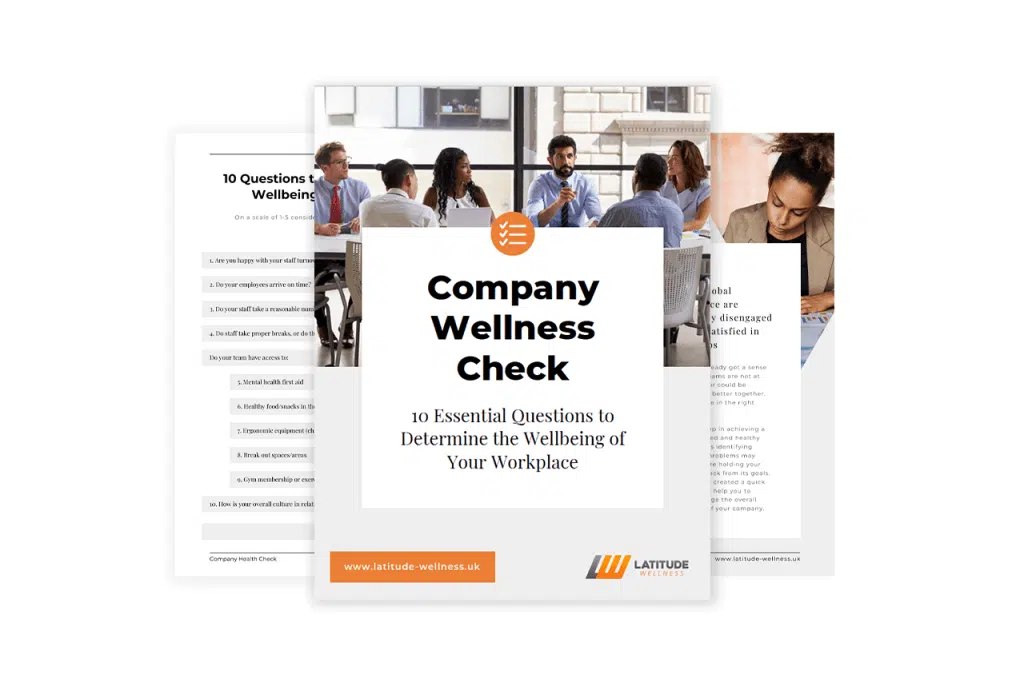
How ‘well’ is your workplace currently? Take Latitude’s workplace wellness test and consider whether our holistic program might be the fix to lifting your workplace wellbeing in the coming year.